
THE COMPLETE AGO JOBS & HR SAFETY GUIDE
At AGO, we believe in creating a workplace where safety comes first. On this page, you'll find all the essential information, practical tips, and answers related to safety in the workplace.

I am a
temporary worker

Are you a temporary worker and have questions about safety and health at your workplace?

Be sure to check
ikbenuitzendkracht.be

I am a
student worker

Are you a student worker and have questions about safety and health at your workplace?

Be sure to check
ikbenjobstudent.be

Safety on the way
to and from work

They're “hot”—speed pedelecs, electric scooters, electric bikes… but they are also dangerous if not operated safely. Moreover, the consequences of accidents with these vehicles are more severe. Stay safe in the car or on a regular bike as well. Don' t endanger yourself or others!

No need for speed
Road to safety? I'm going for it!

Safety and attentiveness go hand in hand.
Visibility = safety.
Be as 'smart' as your phone, go into automatic mode when driving.
Designated driver = zero alcohol!
Driving faster means saving time? Forget it!

Don't endanger yourself or others!
Promise …

to not drive too fast.
to not use your phone while driving.
to always be visible on your bike/motorbike.
to not drive under the influence of alcohol or drugs.
A promise can save lives

Tips & tricks for
a better office life

1.

Are you drinking enough water?

2.

Fresh air gives a great boost.

3.

Keep your plate balanced; snack healthily.

4.

Don't stress. Be happy!

5.

Keep your back healthy; good posture is crucial.
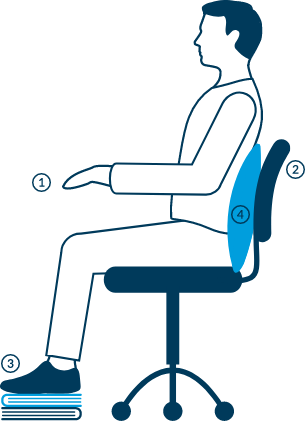
1. Working height

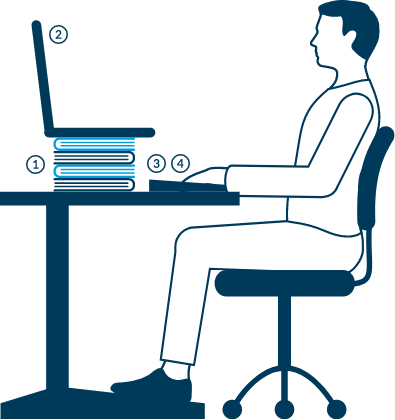
Your working height should be at elbow level. If your table is too low, it should be raised.

You can also create a standing desk by getting creative, for example with an ironing board.


3. Feet

Make sure your feet are flat on the ground. If not, create a sturdy footrest using old books or another firm object.
2. Chair

Provide a stable and comfortable chair for screen work.

You can also create a standing desk, for example with an ironing board.


4. Lumbar support

Provide lumbar support (with a cushion) on the chair to support the curve of your lower back and tilt your pelvis slightly forward.
1. Working height

Your working height should be at elbow level. If your table is too low, it should be raised.

You can also create a standing desk by getting creative, for example with an ironing board.


2. Chair

Provide a stable and comfortable chair for screen work.

You can also create a standing desk, for example with an ironing board.


3. Feet

Make sure your feet are flat on the ground. If not, create a sturdy footrest using old books or another firm object.


4. Lumbar support

Provide lumbar support (with a cushion) on the chair to support the curve of your lower back and tilt your pelvis slightly forward.


Your screen, keyboard,
and mouse deserve attention too!

1. External equipment

If you only have a laptop, ideally use an external screen, keyboard, and mouse. If no external screen is available, use a laptop stand, some paper packs, or books to raise the screen to eye level.


3. Mouse

Choose a mouse that fits well in your hand and sits close to the keyboard, so your wrist and hand are in a neutral position (in line with each other).
2. Screen

Sit directly in front of the screen. Your eyes should be at the top edge of the screen. This ensures the center of the screen is 15° below your eyes. With multifocal glasses, you can achieve the same head position by lowering the screen a bit.


4. Keyboard

Make sure your keyboard lies as flat as possible and is positioned directly in front of you.
1. External equipment

If you only have a laptop, ideally use an external screen, keyboard, and mouse. If no external screen is available, use a laptop stand, some paper packs, or books to raise the screen to eye level.


2. Screen

Sit directly in front of the screen. Your eyes should be at the top edge of the screen. This ensures the center of the screen is 15° below your eyes. With multifocal glasses, you can achieve the same head position by lowering the screen a bit.


3. Screen

Sit directly in front of the screen. Your eyes should be at the top edge of the screen. This ensures the center of the screen is 15° below your eyes. With multifocal glasses, you can achieve the same head position by lowering the screen a bit.


4. Keyboard

Make sure your keyboard lies as flat as possible and is positioned directly in front of you.


Interrupt sitting: that's the message!

6.

The health bucket challenge, challenge your colleagues. It's team-time!

7.

Move and stretch regularly
AGO choose to move!

A true professional wears
personal protective equipment!

Don't compromise between safety and comfort!

As an employee, you are required to use your personal protective equipment.
Is your equipment damaged or worn out? Replace it! Ask your AGO office for new shoes.
Don't know how to use your equipment? Just ask!
Prevention is better than cure Safety first!
You can only drive a forklift or reach truck if you have undergone training. As a forklift driver, you perform a “safety function”: a medical examination is required! Operating a forklift is prohibited for student workers!

Safe operation of a forklift/reach truck starts with the driver

Important: a valid certificate is required! You may only operate the specified type of motorized vehicle.
Be aware: an internal forklift/reach truck certificate is only valid at the company where it was issued!

10 AGO Safety Tips

1.

Always wear appropriate work clothing and personal protective equipment.

2.

Wearing the seatbelt is mandatory!

3.

Keep your arms and legs inside the cabin at all times.

4.

Never allow a passenger to ride along.

5.

Risk of tipping: Never drive with a raised load.

6.

Always drive forwards up a slope and backwards down.

7.

Drive slowly in corners to reduce the risk of tipping.

8.

Always look in the direction you're driving and keep an eye on your surroundings.

9.

Lifting people is only allowed with an approved work basket.

10.

Finished working? Store the key.

Safety Basics for your protection

1.

Follow the company's safety instructions and procedures.

2.

Never remove collective protective measures.

3.

VAlways ask for permission before disabling safety devices.

4.

Apply Lockout-Tagout (LoTo) to secure machines and installations.

5.

Never remove dirt by hand while the machine is running.

6.

Order and cleanliness: negligence causes accidents!

7.

Alcohol, drugs, and safety don't mix!

8.

Know where the emergency stop is located.

Protect yourself

Always wear the prescribed personal protective equipment, but never wear gloves near moving parts
(such as chains, gears, belts, etc.)
Before performing any action on a machine:

Wait for a complete stop.

Avoid restarting by a third party or due to carelessness.

5 Tips for Safe Machine Work

1.

Know what you’re doing!
Ensure you’ve received AND understood all necessary instructions regarding machine operation!
Injuries hurt, safety doesn't!

2.

Always set a good example in terms of safety!
Prevention is also action: I watch out for my safety and yours!!
NEVER distract colleagues working with machines.

3.

More order = fewer accidents!
A dirty and messy environment is unsafe to work in.
Keep your workplace, tools, and machines clean every day.

4.

Don’t ignore safety!
Always wear the necessary protective gear:

Hearing protection is essential: MANDATORY above 80dB

Safety shoes are always MANDATORY

Safety glasses: wear them when there are flying particles and dust

Safety helmet: smart people always wear a helmet on-site

Gloves: always available, ask for them

True professionals wear their protective clothing...
They know why!

5.

Work safely: stay focused!
Remove waste or loose parts only after the machine is switched off.
NEVER reach into moving parts, keep your fingers safe!
NOOIT remove a machine’s protective cover!
Ensure good eye protection.
Handles should not be damaged.
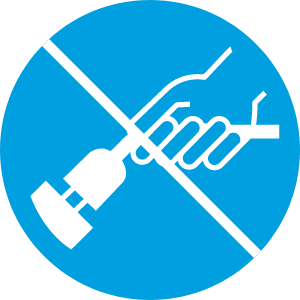
Never pull on a cord to unplug it.
Always ask for correct work instructions for first-time use.
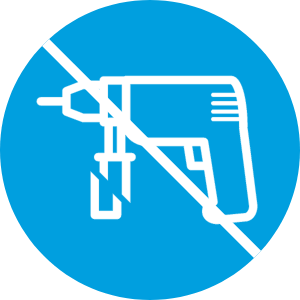
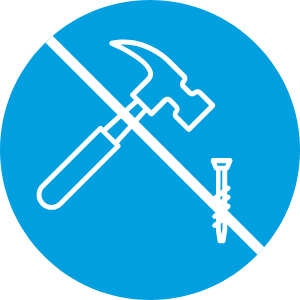
Use hand tools only for their intended purpose.
always go for WELL-LUBRICATED, SHARPENED
& SECURELY FASTENED TOOLS

Avoid the CNI:

Carelessness
Negligence
Incompetence
Know safety no pain
Don’t get distracted while walking on the roof.
Never walk backward.
Test the ground before placing your weight.
Take your time climbing up / down ladders.
No guardrails or safety nets provided? Wear a safety harness.
Don’t climb over anything.
Stay alert!

Are you a student worker

Limit working at heights as much as possible.
It’s forbidden to help build/dismantle scaffolding.
You may work on scaffolding if you don’t have a fear of heights
and if guardrails or other protection is provided.
Working in a lift is only allowed under supervision; operating it is prohibited!
Working on a ladder? Always maintain three points of contact (e.g., both feet and one hand).
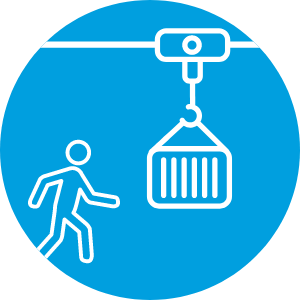
Position the trolley directly above the load.
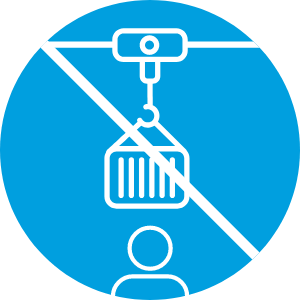
Never walk under the load.
Always walk behind the load and maintain a safe distance.
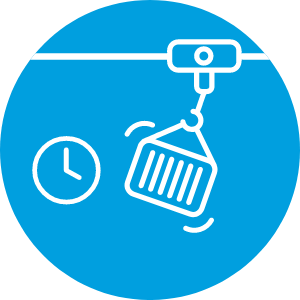
No need for speed, position the load slowly.
If the load swings, let it settle first. Don’t try to stop it.
Always be careful

Avoid the CNI:

Carelessness
Negligence
Incompetence
Know safety no pain

Essential safety rules - Golden rules
If not followed: Stop the activity or immediately rectify the situation!

1.

Driver's license
I have the appropriate driver's license for the vehicle I am driving.

2.

Safety clothing
I always wear my high-visibility clothing.
Class 2 clothing: Always.
Class 3 clothing: outside built-up areas (>50 km/h) or in poor visibility (<200 m).
Shorts are prohibited.

3.

Knowledge of underground and above-ground pipes
Before starting to dig in the ground, I check whether there are any pipes present using the location plans and, if necessary, probe rings.
If there are pipes, these plans must remain available on site.

4.

Shoring protection
When there is a risk of collapse or subsidence during work, I protect myself against this risk by using shoring, embankments, etc.
(Risk assessment by the site manager).

5.

Wearing safety shoes
I always wear my safety shoes on the construction site and in the workshop.

6.

Wearing chainsaw clothing
When working with a chainsaw, I always wear my chainsaw pants and my forestry vest.
When using a pruning saw, I also wear chainsaw sleeves or a chainsaw vest.

7.

Wearing fall protection
When working at heights of 2 meters or more, I always use collective protection or personal protective equipment (harness, fall line, etc.).
Exception when using ladders.

8.

Wearing a safety helmet
When there is a risk of falling objects (stones, branches, tools, etc.)
or a risk of bumping my head (e.g., near a crane), I stay out of the danger zone or remove the risk.
If this is not possible, I wear my helmet.

9.

Wearing safety glasses
When working with the risk of projectiles (e.g., during forest clearing, grinding, sanding, deburring, etc.), I wear my safety glasses.

10.

Working under the influence is not permitted (alcohol, drugs, and certain medications, etc.).
The use of alcohol, drugs, and certain medications that may affect my alertness
or my safety and/or the safety of my colleagues is prohibited.
Immediately report any workplace accident to your supervisor and your AGO office.

It’s important to provide as many details as possible: the time, circumstances, possible injuries, and any witnesses to the accident. An accident on the way to or from work is also considered a workplace accident. Be aware that the work accident insurance does not cover material damage.

As soon as possible, submit the following documents to your AGO office:
Workplace accident information form OR roadwork accident information form
Medical report (to be filled out by the attending physician)